kobold
Pro Gun Wash Sprayer

Pro Gun Wash Sprayer

Pro Gun Wash Sprayer

Gun Wash Sprayer for Spray Gun Cleaning and Maintenance

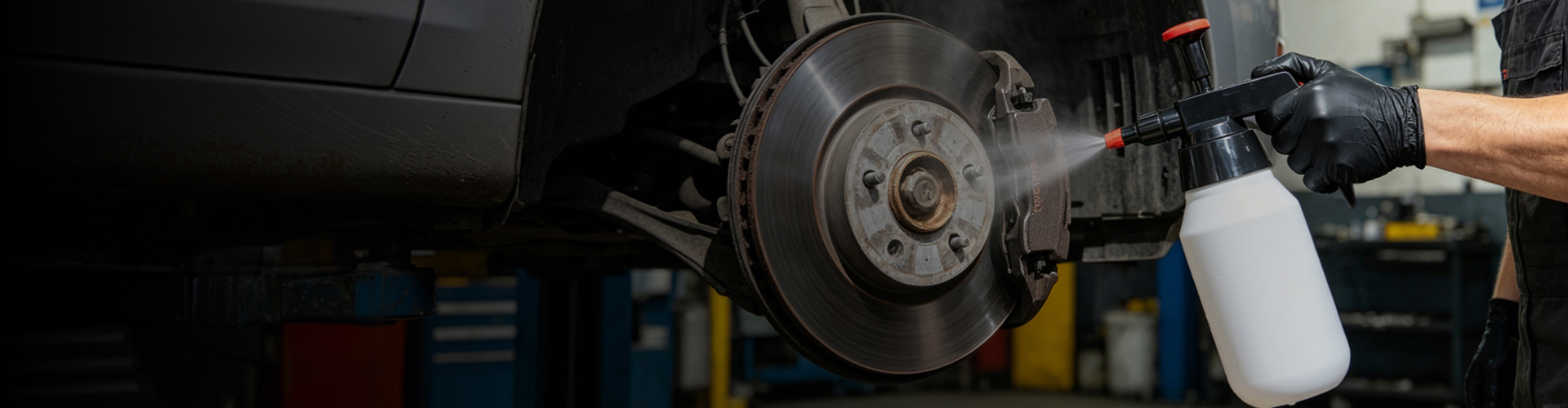
Kobold Gun Wash Sprayers perfect for maintenance of spray guns used in automotive refinishing, industrial coating and painting applications. A Kobold gun wash sprayer provides a controlled, refillable solution for flushing spray guns with compatible cleaning solvents — replacing wasteful disposable methods with a purpose-built tool designed for daily workshop use.

Kobold is a Solvent Sprayer manufacturer with 22 years of industry experience, 500+ served clients and 50+ active patents. Our spray gun wash equipment is engineered for body shops, paint suppliers, industrial coating facilities and aftermarket distributors who need reliable, solvent-resistant cleaning tools.


Key Design Features of a Professional Gun Wash Sprayer

Tank and Pump Construction
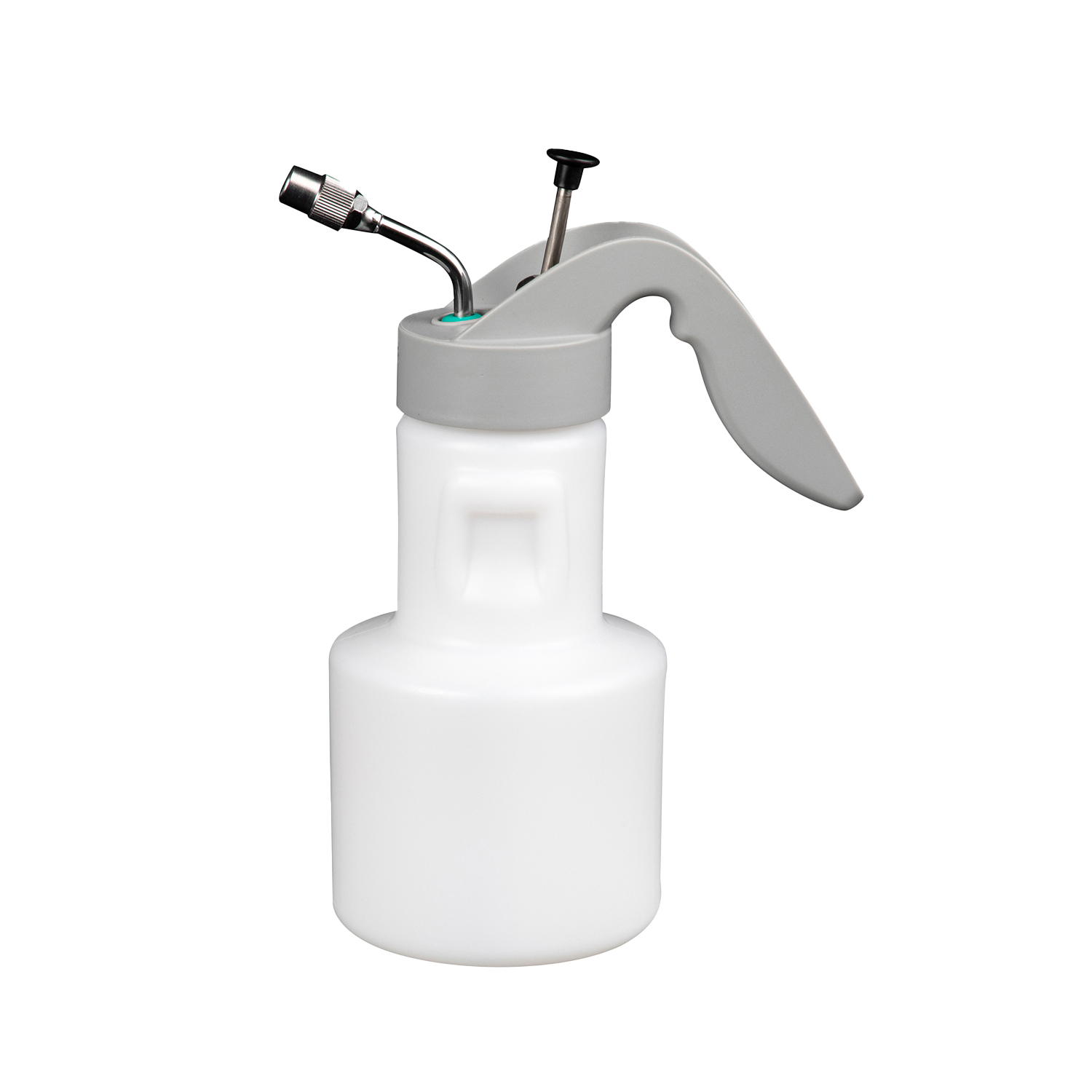
● 1L tank capacity with large opening for easy filling and solvent recovery
● Tank material options including HDPE and polyamide for chemical resistance
● Powerful piston pump in nickel-plated brass for durable, repeated pressurization
● Level indicator and measurement scale for solvent volume monitoring

Nozzle and Spray Control
● Adjustable nozzle (Ø0.8 mm typical) for precise solvent delivery into gun passages
● Spray pattern adjustable from focused jet to wide mist
● Nickel-plated brass nozzle for solvent resistance and long service life
● Targeted delivery reduces solvent waste and prevents overspray

Pressure and Performance
● Manual pump operation — no compressed air or electricity required
● Operating pressure up to 12 bar for forcing solvent through narrow fluid passages
● Temperature range typically 5°C to 50°C for workshop and booth environments
● Consistent pressure delivery for thorough cleaning in fewer pump strokes


Applications Across Refinishing and Coating Workflows

A Kobold gun wash sprayer supports cleaning and maintenance across multiple professional environments:

● Automotive refinishing — flushing HVLP, LVLP and conventional spray guns between color changes
● Industrial coating — cleaning electrostatic and pressure-fed spray equipment after production runs
● Paint booth maintenance — removing paint buildup from gun bodies, cups and fittings
● Clearcoat and basecoat cleaning — dedicated applicators matched to cleaner type and solvent strength
● Equipment servicing — flushing fluid passages, needles and nozzles during scheduled maintenance
● Workshop training — providing standardized cleaning tools for technician onboarding programs

For operations running multiple paint systems, Kobold recommends using dedicated cleaning applicators with color-coded identification for different cleaner types to prevent cross-contamination.


OEM and ODM Manufacturing from Kobold

Kobold's integrated manufacturing capability — covering design, mold making, injection molding, assembly and quality control — provides B2B buyers with a true manufacturing partner rather than a trading company. This is particularly valuable for spray gun cleaning applicators, where material selection, seal compatibility and nozzle precision directly affect product performance.

Customization options for gun wash sprayer programs:

● Customized tank capacity and dimensions for specific market needs
● Customized seal materials matched to customer-specified cleaning solvents
● Customized nozzle diameter and spray pattern configuration
● Customized color coding for chemical identification systems
● Private label solution — your brand, logo and labeling on Kobold-manufactured product
● Mold development — new tooling for unique designs or form factor differentiation
● Customized packaging for retail, trade or industrial distribution channels

Our OEM/ODM development process follows a structured path:

● Idea — share your market requirement, target cleaner type and desired product specification
● Design — Kobold engineering develops the product concept and validates material compatibility
● Mold — precision tooling is produced in-house for faster lead times
● Production — injection molding, brass machining and assembly under one roof
● Quality Control — IQC, IPQC, PSQC and OQC inspections across every production stage

All products are manufactured in compliance with ISO 9001, CE, UL and GS standards. Model-specific certification documentation is available upon request.


Source Your Gun Wash Sprayer from Kobold

Tell us your cleaner type, SDS, target capacity, seal material preference, estimated order quantity and branding requirements. As a Solvent Sprayer manufacturer with integrated production capabilities and 22 years of experience, Kobold can help you develop the right spray gun wash equipment for your market.

Contact Kobold for product selection and OEM quotation


Gun Wash Sprayer FAQs

Q: What is a gun wash sprayer?

A gun wash sprayer is a refillable pump-action bottle designed to deliver cleaning solvent through the internal passages, nozzles and air caps of spray guns. It uses manual pressure to force solvent through narrow fluid channels, removing paint residue after each use.

Q: What is the difference between an HCA and PCA cleaning applicator?

HCA (High Quality) cleaning applicators are designed for mild cleaners and are typically equipped with FKM (Viton) seals. They cover approximately 95% of basecoat cleaning applications. PCA (Premium Quality) cleaning applicators are designed for aggressive cleaners and solvents, including those containing acetone, and typically use specialty seals such as BMS 210. The choice depends on your specific cleaner formulation.

Q: Can I use any solvent in a Kobold gun wash sprayer?

Always confirm chemical compatibility with Kobold before use. Different gun wash formulations contain different solvent blends. No single seal or tank material resists every chemical. Provide the SDS for your cleaner so Kobold can recommend the appropriate model, seal material and tank configuration.

Q: What capacity is available for spray gun cleaning bottles?

The industry-standard capacity for this product category is 1 liter. Kobold can also discuss customized capacity requirements for specific market needs. Contact our team to discuss your specifications.

Q: Does Kobold offer spare parts for cleaning applicators?

Yes. Kobold supports maintenance through replaceable components including seal and gasket kits, piston sets, nozzle replacements, suction filters and pressure valves. Contact our team for a spare parts list specific to your model.

Q: Can Kobold manufacture cleaning applicators under my own brand?

Yes. Kobold provides OEM and private-label services including customized color, packaging, functionality, seal materials and mold development. Our integrated manufacturing process — from design to quality control — supports B2B buyers who need branded spray gun cleaning equipment for their market.

Q: What certifications does Kobold hold?

Kobold products are manufactured in compliance with ISO 9001, CE, UL and GS standards. Certification details specific to individual models and target markets are available upon request.

0

Inquiry(1/10)

Clear All

READY TO START A PROJECT?

Customized color, packaging, and functionality, private label solution, mold development — built to match your brand and market requirements.

Get A Free Quote

  • Afghanistan
  • Albania
  • Algeria
  • American Samoa
  • Andorra
  • Angola
  • Anguilla
  • Antarctica
  • Antigua and Barbuda
  • Argentina
  • Armenia
  • Aruba
  • Australia
  • Austria
  • Azerbaijan
  • Bahamas
  • Bahrain
  • Bangladesh
  • Barbados
  • Belarus
  • Belgium
  • Belize
  • Benin
  • Bermuda
  • BBhutan
  • Bolivia
  • Bosnia and Herzegovina
  • Botswana
  • Bouvet Island
  • Brazil
  • British Indian Ocean Territory
  • Brunei Darussalam
  • Bulgaria
  • Burkina Faso
  • Burundi
  • Cambodia
  • Cameroon
  • Canada
  • Cape Verde
  • Cayman Islands
  • Central African Republic
  • Chad
  • Chile
  • China
  • Christmas Island
  • Cocos (Keeling) Islands
  • Colombia
  • Comoros
  • Congo
  • Cook Islands
  • Costa Rica
  • Cote D'Ivoire
  • Croatia
  • Cuba
  • Cyprus
  • Czech Republic
  • Denmark
  • Djibouti
  • Dominica
  • East Timor
  • Ecuador
  • Egypt
  • El Salvador
  • Equatorial Guinea
  • Eritrea
  • Estonia
  • Ethiopia
  • Falkland Islands (Malvinas)
  • Faroe Islands
  • Fiji
  • Finland
  • France, Metropolitan
  • French Guiana
  • French Polynesia
  • Gabon
  • Gambia
  • Georgia
  • Germany
  • Ghana
  • Gibraltar
  • Greece
  • Greenland
  • Grenada
  • Guadeloupe
  • Guam
  • Guatemala
  • Guinea
  • Guinea-Bissau
  • Guyana
  • Haiti
  • Honduras
  • Hong Kong, China
  • Hungary
  • Iceland
  • India
  • Indonesia
  • Iran (Islamic Republic of)
  • Iraq
  • Ireland
  • Israel
  • Italy
  • Jamaica
  • Japan
  • Jordan
  • Kazakhstan
  • Kenya
  • Kiribati
  • North Korea
  • South Korea
  • Kuwait
  • Kyrgyzstan
  • Lao People's Democratic Republic
  • Latvia
  • Lebanon
  • Lesotho
  • Liberia
  • Libyan Arab Jamahiriya
  • Liechtenstein
  • Lithuania
  • Luxembourg
  • Macau
  • Madagascar
  • Malawi
  • Malaysia
  • Maldives
  • Mali
  • Malta
  • Marshall Islands
  • Martinique
  • Mauritania
  • Mauritius
  • Mayotte
  • Mexico
  • Micronesia
  • Moldova
  • Monaco
  • Mongolia
  • Montserrat
  • Morocco
  • Mozambique
  • Myanmar
  • Namibia
  • Nauru
  • Nepal
  • Netherlands
  • New Caledonia
  • New Zealand
  • Nicaragua
  • Niger
  • Nigeria
  • Niue
  • Norfolk Island
  • Northern Mariana Islands
  • Norway
  • Oman
  • Pakistan
  • Palau
  • Panama
  • Papua New Guinea
  • Paraguay
  • Peru
  • Philippines
  • Pitcairn
  • Poland
  • Portugal
  • Puerto Rico
  • Qatar
  • Reunion
  • Romania
  • Russian Federation
  • Rwanda
  • Saint Kitts and Nevis
  • Saint Lucia
  • Saint Vincent and the Grenadines
  • Samoa
  • San Marino
  • Saudi Arabia
  • Senegal
  • Seychelles
  • Sierra Leone
  • Singapore
  • Slovak Republic
  • Slovenia
  • Solomon Islands
  • Somalia
  • South Africa
  • Spain
  • Sri Lanka
  • St. Helena
  • Sudan
  • Suriname
  • Swaziland
  • Sweden
  • Switzerland
  • Syrian Arab Republic
  • Taiwan, China
  • Tajikistan
  • Tanzania
  • Thailand
  • Togo
  • Tokelau
  • Tonga
  • Trinidad and Tobago
  • Tunisia
  • Turkey
  • Turkmenistan
  • Turks and Caicos Islands
  • Tuvalu
  • Uganda
  • Ukraine
  • United Arab Emirates
  • United Kingdom
  • United States
  • Uruguay
  • Uzbekistan
  • Vanuatu
  • Vatican City State (Holy See)
  • Venezuela
  • Viet Nam
  • Virgin Islands (U.S.)
  • Wallis and Futuna Islands
  • Western Sahara
  • Yemen
  • Zambia
  • Zimbabwe
  • Montenegro
  • Serbia
  • Palestine
  • South Sudan
  • Jersey

Latest News

Our products are widely used in automotive maintenance, gardening, agriculture, cleaning, sanitation, and firefighting industries.
Refillable Brake Cleaner Sprayers vs Aerosols: Total Cost Comparison Refillable Brake Cleaner Sprayers vs Aerosols: Total Cost Comparison

Oct. 30, 2026

When I compare refillable brake cleaner sprayers vs aerosols, I look beyond the purchase price. The practical calculation includes usable fluid volume, bulk brake cleaner cost, sprayer equipment, refill labor, maintenance, waste, disposal, storage, and technician workflow. In many repair shops, aerosols remain convenient for low-volume work, while refillable systems can reduce cost per

Learn More >
Choosing Nozzle Patterns for Degreasers, Cleaners, and Penetrating Fluids Choosing Nozzle Patterns for Degreasers, Cleaners, and Penetrating Fluids

Oct. 29, 2026

Choosing Nozzle Patterns for Degreasers, Cleaners, and Penetrating Fluids starts with the cleaning objective, not the chemical name alone. Use a flat-fan pattern for broad surface coverage, a full-cone pattern for distributed impact, a hollow-cone pattern for lighter atomization, and a needle stream for targeted penetration. Then confirm pressure, flow rate, spray angle, distance, nozzle size,

Learn More >
Quality Tests to Request from a Professional Sprayer Manufacturer Quality Tests to Request from a Professional Sprayer Manufacturer

Oct. 28, 2026

When I evaluate a sprayer supplier, I do not rely on product photos, catalog claims, or a single inspection report. I request measurable evidence covering operation, pressure, leakage, flow rate, spray distribution, durability, safety, calibration, and regulatory compliance. These checks show whether a manufacturer can control both individual units and production batches.

Learn More >
Handheld vs Backpack Portable Sprayers for Different Workloads Handheld vs Backpack Portable Sprayers for Different Workloads

Oct. 27, 2026

When I compare Handheld vs Backpack Portable Sprayers for Different Workloads, I focus on four practical differences: tank capacity, coverage area, operator positioning, and user fatigue. Handheld sprayers suit small, precise, occasional jobs, while backpack sprayers suit larger areas, longer sessions, and repeated coverage. The correct choice also depends on terrain, spraying frequency, chemical

Learn More >
Choosing Cleaner Bottles for Waterborne and Solvent-Based Paint Systems Choosing Cleaner Bottles for Waterborne and Solvent-Based Paint Systems

Oct. 26, 2026

Choosing Cleaner Bottles for Waterborne and Solvent-Based Paint Systems starts with matching the bottle, closure, gasket, and spray mechanism to the cleaning chemical. Waterborne paint cleaners generally require bottles that resist swelling, stress cracking, and residue retention, while solvent-based cleaners may require polyethylene, polypropylene, fluorinated plastic, metal, or specialty

Learn More >
Safe Refilling Practices for Brake Cleaner Spray Bottles Safe Refilling Practices for Brake Cleaner Spray Bottles

Oct. 23, 2026

For Safe Refilling Practices for Brake Cleaner Spray Bottles, I use a five-stage process: verify the cleaner and container, prepare a ventilated ignition-free area, transfer the liquid with compatible equipment, close and label the bottle, then inspect and store it safely.

Learn More >
Automotive Solvent Sprayer Maintenance for Longer Service Life Automotive Solvent Sprayer Maintenance for Longer Service Life

Oct. 23, 2026

Automotive Solvent Sprayer Maintenance for Longer Service Life begins with a safe shutdown, pressure release, compatible flushing solvent, nozzle and filter cleaning, seal inspection, and controlled storage. I also record pressure behavior, spray-pattern changes, hose condition, and component wear after each service cycle. This sequence helps auto repair shops reduce clogs, chemical exposure,

Learn More >
OEM vs ODM Sprayer Manufacturing: Which Model Fits Your Brand? OEM vs ODM Sprayer Manufacturing: Which Model Fits Your Brand?

Oct. 09, 2026

OEM vs ODM Sprayer Manufacturing: Which Model Fits Your Brand? The answer depends on who controls the design, how much customization you need, your launch deadline, expected order volume, and whether your brand requires exclusive intellectual property. OEM is buyer-led: the brand supplies the product concept or engineering requirements, while the manufacturer produces it. ODM is manufacturer-led:

Learn More >
Matching Sprayer Seal Materials to Acids, Solvents, and Cleaners Matching Sprayer Seal Materials to Acids, Solvents, and Cleaners

Oct. 08, 2026

Matching sprayer seal materials to acids, solvents, and cleaners requires more than selecting an elastomer from a general chart. I first check the exact chemical, concentration, temperature, exposure time, pressure, and wetted components. EPDM commonly suits water-based and alkaline cleaners, FKM suits many oils and solvents, and PTFE offers broad resistance to aggressive chemicals, subject to

Learn More >
Daily Maintenance Routine for Professional Gun Wash Sprayers Daily Maintenance Routine for Professional Gun Wash Sprayers

Sep. 30, 2026

A Daily Maintenance Routine for Professional Gun Wash Sprayers includes depressurizing the unit, verifying solvent compatibility, flushing the pump and fluid passages, cleaning the spray gun and nozzle, inspecting filters and seals, checking leaks, drying exposed parts, and recording the results. I use this sequence to protect cleaning performance, reduce avoidable downtime, and identify repair

Learn More >
How Spray Pressure Affects Brake Cleaning Efficiency and Chemical Use How Spray Pressure Affects Brake Cleaning Efficiency and Chemical Use

Sep. 29, 2026

Brake cleaner is a fast-evaporating solvent spray that dissolves and flushes away grease, oil, brake fluid, and brake dust from metal brake components. It works through solvent action, spray displacement, and rapid evaporation, leaving little or no residue when used correctly. Spray pressure determines how widely the solvent spreads, how forcefully contaminants are displaced, and how much product

Learn More >