kobold
All-purpose Trigger Sprayer

All-purpose Trigger Sprayer

All-purpose Trigger Sprayer

Trigger Sprayer Bottle for Cleaning, Disinfection and Industrial Use

Kobold All-purpose Trigger Sprayer is the ideal tool for any cleaning and disinfection work, optimal for spraying a wide variety of chemicals such as disinfectants, neutral cleaners, alcohols, diluted acids or diluted alkali solutions. A reliable trigger sprayer must deliver consistent output, resist chemical degradation over hundreds of refills and provide adjustable spray patterns for different surfaces and liquids. Kobold manufactures all-purpose trigger sprayer bottles engineered for professional cleaning, disinfection and light industrial applications — offering a refillable, cost-effective alternative to disposable bottles and aerosol cans. For heavier-duty solvent applications, Kobold also produces the Solvent Sprayer for automotive and industrial maintenance workflows.

Kobold is a trigger sprayer bottle manufacturer with 22 years of industry experience, 500+ served clients and 50+ active patents. Our sprayers are designed for distributors, cleaning product brands, janitorial supply companies and industrial buyers who need durable, customizable dispensing solutions at scale.


What Makes a Quality Chemical Resistant Pressure Sprayer

Not all trigger sprayers perform equally when exposed to cleaning chemicals. Standard sprayers with generic rubber seals and low-grade plastic nozzles degrade quickly when used with disinfectants, alcohols, acidic cleaners or solvent-based formulations. A chemical resistant pressure sprayer addresses these issues through material selection and design:

● Bottle material — HDPE (high-density polyethylene) is the industry standard for chemical resistance, durability and cost efficiency
● Sprayer head material — polypropylene (PP) provides structural stability and chemical resistance for the trigger mechanism
● Seal materials — FKM (Viton), EPDM or other compounds can be selected based on the specific chemical formulation
● Nozzle — adjustable from fine mist to focused stream, with brass or chemical-resistant plastic options
● Trigger design — three-finger or ergonomic trigger reduces hand fatigue during extended use
● Dip tube — length matched to bottle capacity for complete fluid evacuation
● Neck finish — 28/400 is the industry-standard thread, compatible with most commercial spray bottles

Kobold can configure materials and components based on your target chemicals, output requirements and branding needs. Always confirm chemical compatibility before specifying a seal or bottle material — no single compound resists every formulation.


Kobold All-Purpose Trigger Sprayer Specifications

The Kobold all-purpose trigger sprayer is designed for professional cleaning and disinfection workflows. Suitable chemicals include:

● Disinfectants
● Neutral cleaners
● Alcohols
● Diluted acids
● Diluted alkali solutions


Key Design Features

Bottle and Body
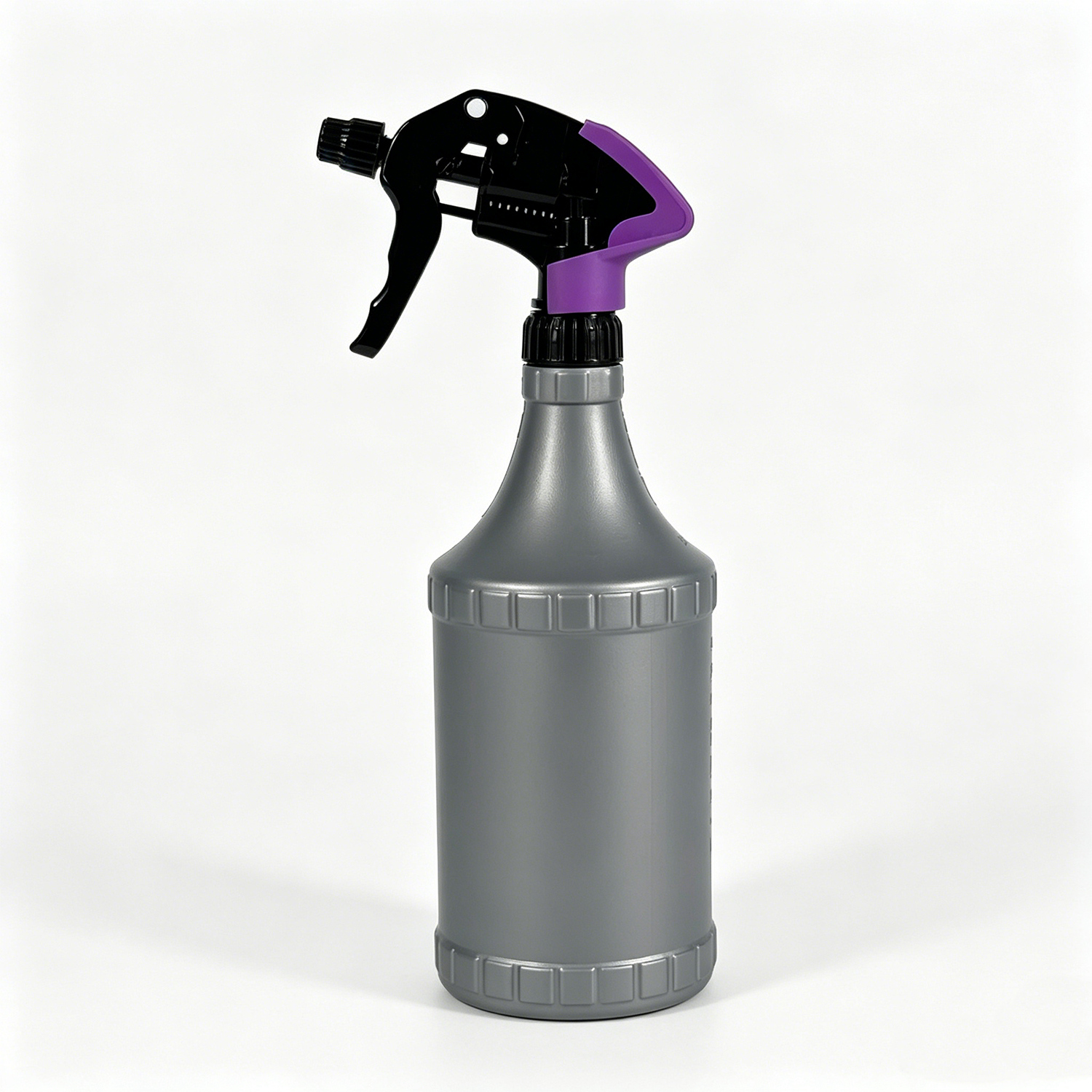
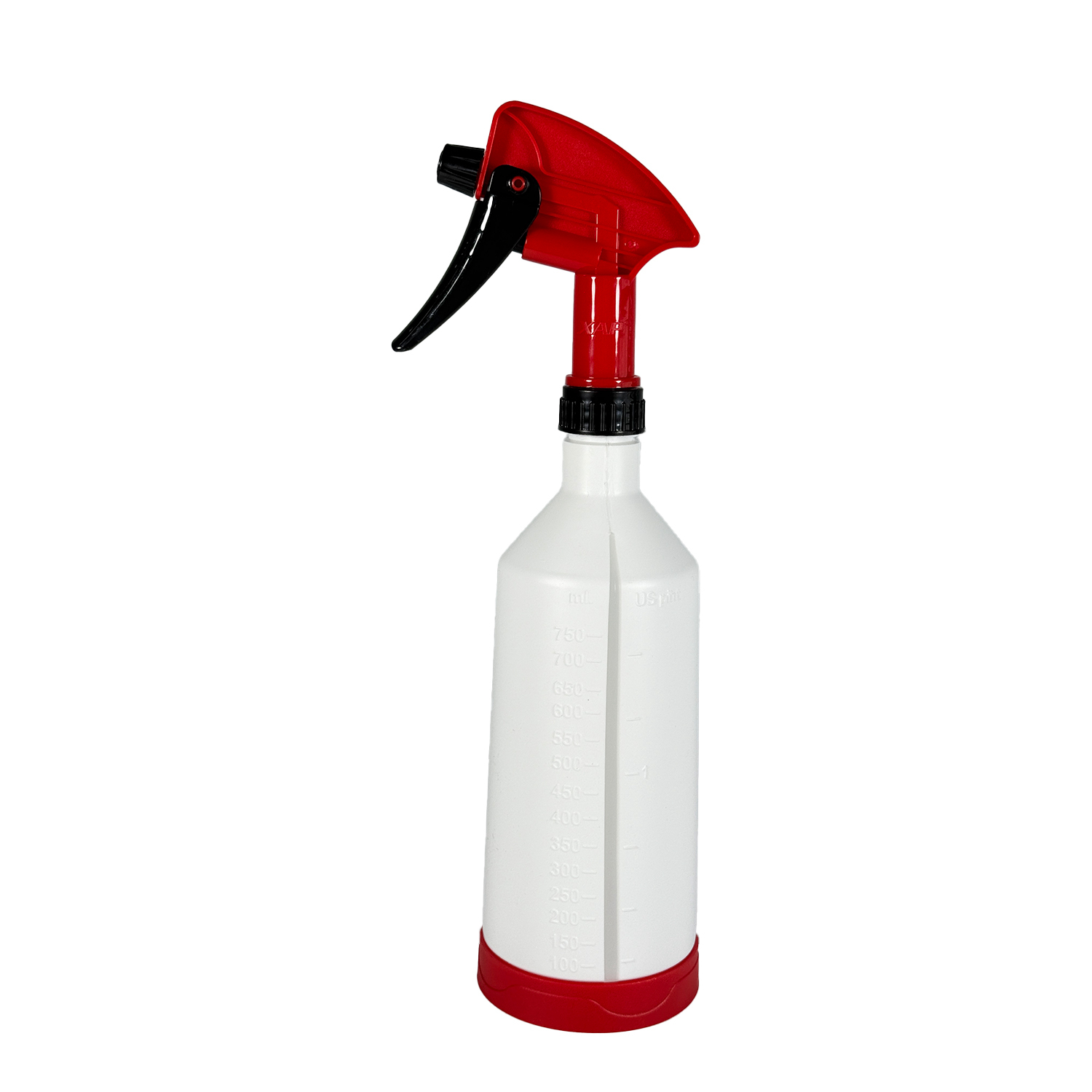
● HDPE bottle material for chemical resistance and impact durability
● Available capacities typically 16 oz, 24 oz and 32 oz (model-dependent)
● Graduation marks for accurate dilution measurement
● Color options for chemical identification and brand differentiation

Trigger Mechanism
● Polypropylene sprayer head for structural and chemical resistance
● Ergonomic three-finger trigger for comfortable repeated use
● High output per stroke reduces the number of trigger pulls needed per task
● Positive shut-off nozzle prevents dripping between sprays

Nozzle and Spray Control
● Adjustable nozzle — switch between fine mist and focused stream
● Nozzle options including chemical-resistant plastic or brass insert
● Thread size 28/400 — compatible with standard commercial bottle openings
● Dip tube length matched to bottle size for complete fluid delivery

Seal Configuration
● FKM (Viton) O-rings and piston cups available for broad chemical resistance
● EPDM seals available for specific chemical formulations
● Seal material selection must be confirmed based on your specific liquid — contact Kobold with your SDS


Applications Across Professional Environments

A Kobold all-purpose trigger sprayer bottle supports dispensing across multiple professional settings:

● Janitorial and facility cleaning — applying disinfectants, glass cleaners and surface sanitizers
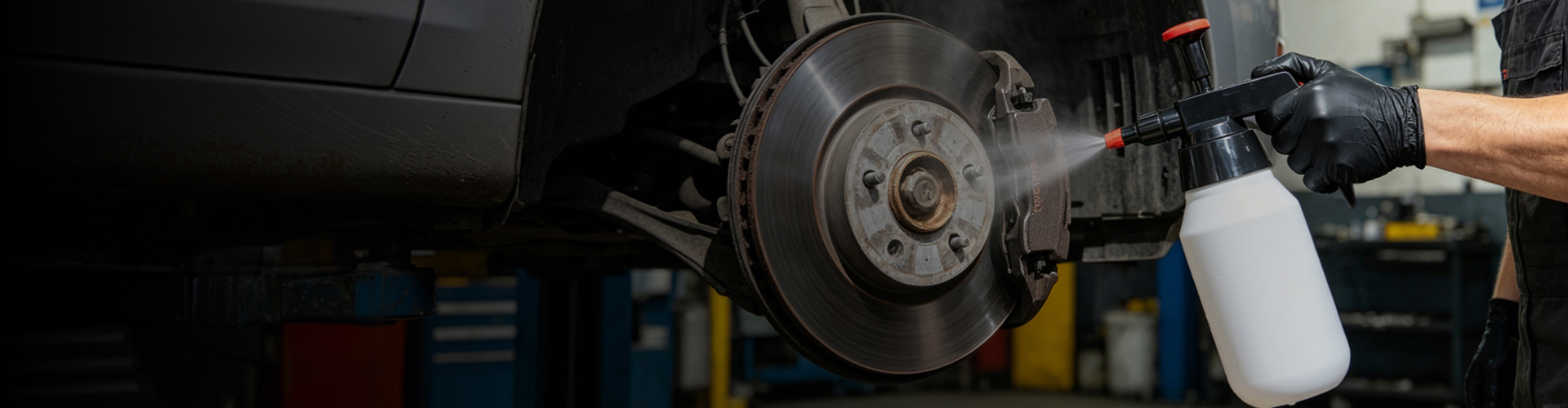
● Automotive detailing — dispensing interior cleaners, wheel cleaners and quick detailers
● Industrial maintenance — applying degreasers, contact cleaners and machine-cleaning fluids

For operations using multiple chemicals, Kobold recommends color-coded bottles and trigger heads to prevent cross-contamination between different cleaning products.


OEM and ODM Manufacturing from Kobold

Kobold's integrated manufacturing capability — covering design, mold making, injection molding, assembly and quality control — provides B2B buyers with a manufacturing partner rather than a trading company. This is particularly valuable for trigger sprayer bottles, where material selection, output consistency and seal compatibility directly affect end-user satisfaction.

Customization options for trigger sprayer bottle programs:

● Customized bottle capacity and dimensions for specific market needs
● Customized bottle color for brand identity or chemical identification systems
● Customized trigger head color and design
● Customized nozzle type — mist, stream, dual-pattern or specialized output
● Customized seal materials matched to customer-specified chemicals
● Customized dip tube length for non-standard bottle sizes
● Private label solution — your brand name, logo and labeling on Kobold-manufactured product
● Mold development — new tooling for unique bottle shapes, trigger designs or form factor differentiation
● Customized packaging — retail-ready, bulk or multi-pack configurations


Source Your Trigger Sprayer Bottle from Kobold

Tell us your chemical type, SDS, target bottle capacity, seal material preference, estimated order quantity and branding requirements. As a trigger sprayer bottle manufacturer with integrated production capabilities and 22 years of experience, Kobold can help you develop the right chemical resistant pressure sprayer for your market.

Contact Kobold for product selection and OEM quotation


Trigger Sprayer Bottle FAQs

Q: What is a trigger sprayer bottle?

A trigger sprayer bottle is a refillable dispensing container with a trigger-actuated spray head. When the trigger is squeezed, liquid is drawn through a dip tube and expelled through a nozzle as a mist or stream. It is widely used for cleaning, disinfection and light industrial applications.

Q: Can I use any chemical in a Kobold trigger sprayer bottle?
Always confirm chemical compatibility with Kobold before use. Different cleaning products contain different active ingredients and solvents. No single seal or bottle material resists every chemical. Provide the SDS for your liquid so Kobold can recommend the appropriate bottle material, seal compound and nozzle configuration.

Q: What bottle sizes are available?

Industry-standard capacities for trigger sprayer bottles include 16 oz, 24 oz and 32 oz. Kobold can also discuss customized capacity and dimensions for specific market requirements. Contact our team to discuss your specifications.

Q: What certifications does Kobold hold?
Kobold products are manufactured in compliance with ISO 9001, CE, UL and GS standards. Certification details specific to individual models and target markets are available upon request.

0

Inquiry(1/10)

Clear All

READY TO START A PROJECT?

Customized color, packaging, and functionality, private label solution, mold development — built to match your brand and market requirements.

Get A Free Quote

  • Afghanistan
  • Albania
  • Algeria
  • American Samoa
  • Andorra
  • Angola
  • Anguilla
  • Antarctica
  • Antigua and Barbuda
  • Argentina
  • Armenia
  • Aruba
  • Australia
  • Austria
  • Azerbaijan
  • Bahamas
  • Bahrain
  • Bangladesh
  • Barbados
  • Belarus
  • Belgium
  • Belize
  • Benin
  • Bermuda
  • BBhutan
  • Bolivia
  • Bosnia and Herzegovina
  • Botswana
  • Bouvet Island
  • Brazil
  • British Indian Ocean Territory
  • Brunei Darussalam
  • Bulgaria
  • Burkina Faso
  • Burundi
  • Cambodia
  • Cameroon
  • Canada
  • Cape Verde
  • Cayman Islands
  • Central African Republic
  • Chad
  • Chile
  • China
  • Christmas Island
  • Cocos (Keeling) Islands
  • Colombia
  • Comoros
  • Congo
  • Cook Islands
  • Costa Rica
  • Cote D'Ivoire
  • Croatia
  • Cuba
  • Cyprus
  • Czech Republic
  • Denmark
  • Djibouti
  • Dominica
  • East Timor
  • Ecuador
  • Egypt
  • El Salvador
  • Equatorial Guinea
  • Eritrea
  • Estonia
  • Ethiopia
  • Falkland Islands (Malvinas)
  • Faroe Islands
  • Fiji
  • Finland
  • France, Metropolitan
  • French Guiana
  • French Polynesia
  • Gabon
  • Gambia
  • Georgia
  • Germany
  • Ghana
  • Gibraltar
  • Greece
  • Greenland
  • Grenada
  • Guadeloupe
  • Guam
  • Guatemala
  • Guinea
  • Guinea-Bissau
  • Guyana
  • Haiti
  • Honduras
  • Hong Kong, China
  • Hungary
  • Iceland
  • India
  • Indonesia
  • Iran (Islamic Republic of)
  • Iraq
  • Ireland
  • Israel
  • Italy
  • Jamaica
  • Japan
  • Jordan
  • Kazakhstan
  • Kenya
  • Kiribati
  • North Korea
  • South Korea
  • Kuwait
  • Kyrgyzstan
  • Lao People's Democratic Republic
  • Latvia
  • Lebanon
  • Lesotho
  • Liberia
  • Libyan Arab Jamahiriya
  • Liechtenstein
  • Lithuania
  • Luxembourg
  • Macau
  • Madagascar
  • Malawi
  • Malaysia
  • Maldives
  • Mali
  • Malta
  • Marshall Islands
  • Martinique
  • Mauritania
  • Mauritius
  • Mayotte
  • Mexico
  • Micronesia
  • Moldova
  • Monaco
  • Mongolia
  • Montserrat
  • Morocco
  • Mozambique
  • Myanmar
  • Namibia
  • Nauru
  • Nepal
  • Netherlands
  • New Caledonia
  • New Zealand
  • Nicaragua
  • Niger
  • Nigeria
  • Niue
  • Norfolk Island
  • Northern Mariana Islands
  • Norway
  • Oman
  • Pakistan
  • Palau
  • Panama
  • Papua New Guinea
  • Paraguay
  • Peru
  • Philippines
  • Pitcairn
  • Poland
  • Portugal
  • Puerto Rico
  • Qatar
  • Reunion
  • Romania
  • Russian Federation
  • Rwanda
  • Saint Kitts and Nevis
  • Saint Lucia
  • Saint Vincent and the Grenadines
  • Samoa
  • San Marino
  • Saudi Arabia
  • Senegal
  • Seychelles
  • Sierra Leone
  • Singapore
  • Slovak Republic
  • Slovenia
  • Solomon Islands
  • Somalia
  • South Africa
  • Spain
  • Sri Lanka
  • St. Helena
  • Sudan
  • Suriname
  • Swaziland
  • Sweden
  • Switzerland
  • Syrian Arab Republic
  • Taiwan, China
  • Tajikistan
  • Tanzania
  • Thailand
  • Togo
  • Tokelau
  • Tonga
  • Trinidad and Tobago
  • Tunisia
  • Turkey
  • Turkmenistan
  • Turks and Caicos Islands
  • Tuvalu
  • Uganda
  • Ukraine
  • United Arab Emirates
  • United Kingdom
  • United States
  • Uruguay
  • Uzbekistan
  • Vanuatu
  • Vatican City State (Holy See)
  • Venezuela
  • Viet Nam
  • Virgin Islands (U.S.)
  • Wallis and Futuna Islands
  • Western Sahara
  • Yemen
  • Zambia
  • Zimbabwe
  • Montenegro
  • Serbia
  • Palestine
  • South Sudan
  • Jersey

Latest News

Our products are widely used in automotive maintenance, gardening, agriculture, cleaning, sanitation, and firefighting industries.
Refillable Brake Cleaner Sprayers vs Aerosols: Total Cost Comparison Refillable Brake Cleaner Sprayers vs Aerosols: Total Cost Comparison

Oct. 30, 2026

When I compare refillable brake cleaner sprayers vs aerosols, I look beyond the purchase price. The practical calculation includes usable fluid volume, bulk brake cleaner cost, sprayer equipment, refill labor, maintenance, waste, disposal, storage, and technician workflow. In many repair shops, aerosols remain convenient for low-volume work, while refillable systems can reduce cost per

Learn More >
Choosing Nozzle Patterns for Degreasers, Cleaners, and Penetrating Fluids Choosing Nozzle Patterns for Degreasers, Cleaners, and Penetrating Fluids

Oct. 29, 2026

Choosing Nozzle Patterns for Degreasers, Cleaners, and Penetrating Fluids starts with the cleaning objective, not the chemical name alone. Use a flat-fan pattern for broad surface coverage, a full-cone pattern for distributed impact, a hollow-cone pattern for lighter atomization, and a needle stream for targeted penetration. Then confirm pressure, flow rate, spray angle, distance, nozzle size,

Learn More >
Quality Tests to Request from a Professional Sprayer Manufacturer Quality Tests to Request from a Professional Sprayer Manufacturer

Oct. 28, 2026

When I evaluate a sprayer supplier, I do not rely on product photos, catalog claims, or a single inspection report. I request measurable evidence covering operation, pressure, leakage, flow rate, spray distribution, durability, safety, calibration, and regulatory compliance. These checks show whether a manufacturer can control both individual units and production batches.

Learn More >
Handheld vs Backpack Portable Sprayers for Different Workloads Handheld vs Backpack Portable Sprayers for Different Workloads

Oct. 27, 2026

When I compare Handheld vs Backpack Portable Sprayers for Different Workloads, I focus on four practical differences: tank capacity, coverage area, operator positioning, and user fatigue. Handheld sprayers suit small, precise, occasional jobs, while backpack sprayers suit larger areas, longer sessions, and repeated coverage. The correct choice also depends on terrain, spraying frequency, chemical

Learn More >
Choosing Cleaner Bottles for Waterborne and Solvent-Based Paint Systems Choosing Cleaner Bottles for Waterborne and Solvent-Based Paint Systems

Oct. 26, 2026

Choosing Cleaner Bottles for Waterborne and Solvent-Based Paint Systems starts with matching the bottle, closure, gasket, and spray mechanism to the cleaning chemical. Waterborne paint cleaners generally require bottles that resist swelling, stress cracking, and residue retention, while solvent-based cleaners may require polyethylene, polypropylene, fluorinated plastic, metal, or specialty

Learn More >
Safe Refilling Practices for Brake Cleaner Spray Bottles Safe Refilling Practices for Brake Cleaner Spray Bottles

Oct. 23, 2026

For Safe Refilling Practices for Brake Cleaner Spray Bottles, I use a five-stage process: verify the cleaner and container, prepare a ventilated ignition-free area, transfer the liquid with compatible equipment, close and label the bottle, then inspect and store it safely.

Learn More >
Automotive Solvent Sprayer Maintenance for Longer Service Life Automotive Solvent Sprayer Maintenance for Longer Service Life

Oct. 23, 2026

Automotive Solvent Sprayer Maintenance for Longer Service Life begins with a safe shutdown, pressure release, compatible flushing solvent, nozzle and filter cleaning, seal inspection, and controlled storage. I also record pressure behavior, spray-pattern changes, hose condition, and component wear after each service cycle. This sequence helps auto repair shops reduce clogs, chemical exposure,

Learn More >
OEM vs ODM Sprayer Manufacturing: Which Model Fits Your Brand? OEM vs ODM Sprayer Manufacturing: Which Model Fits Your Brand?

Oct. 09, 2026

OEM vs ODM Sprayer Manufacturing: Which Model Fits Your Brand? The answer depends on who controls the design, how much customization you need, your launch deadline, expected order volume, and whether your brand requires exclusive intellectual property. OEM is buyer-led: the brand supplies the product concept or engineering requirements, while the manufacturer produces it. ODM is manufacturer-led:

Learn More >
Matching Sprayer Seal Materials to Acids, Solvents, and Cleaners Matching Sprayer Seal Materials to Acids, Solvents, and Cleaners

Oct. 08, 2026

Matching sprayer seal materials to acids, solvents, and cleaners requires more than selecting an elastomer from a general chart. I first check the exact chemical, concentration, temperature, exposure time, pressure, and wetted components. EPDM commonly suits water-based and alkaline cleaners, FKM suits many oils and solvents, and PTFE offers broad resistance to aggressive chemicals, subject to

Learn More >
Daily Maintenance Routine for Professional Gun Wash Sprayers Daily Maintenance Routine for Professional Gun Wash Sprayers

Sep. 30, 2026

A Daily Maintenance Routine for Professional Gun Wash Sprayers includes depressurizing the unit, verifying solvent compatibility, flushing the pump and fluid passages, cleaning the spray gun and nozzle, inspecting filters and seals, checking leaks, drying exposed parts, and recording the results. I use this sequence to protect cleaning performance, reduce avoidable downtime, and identify repair

Learn More >
How Spray Pressure Affects Brake Cleaning Efficiency and Chemical Use How Spray Pressure Affects Brake Cleaning Efficiency and Chemical Use

Sep. 29, 2026

Brake cleaner is a fast-evaporating solvent spray that dissolves and flushes away grease, oil, brake fluid, and brake dust from metal brake components. It works through solvent action, spray displacement, and rapid evaporation, leaving little or no residue when used correctly. Spray pressure determines how widely the solvent spreads, how forcefully contaminants are displaced, and how much product

Learn More >